Second-story addition, Lakeside
An eighteen-sheet permit set for a second-story addition over a single-story ranch. Site, demolition, construction, structural, and Title 24 coordination delivered to a permit-ready standard.
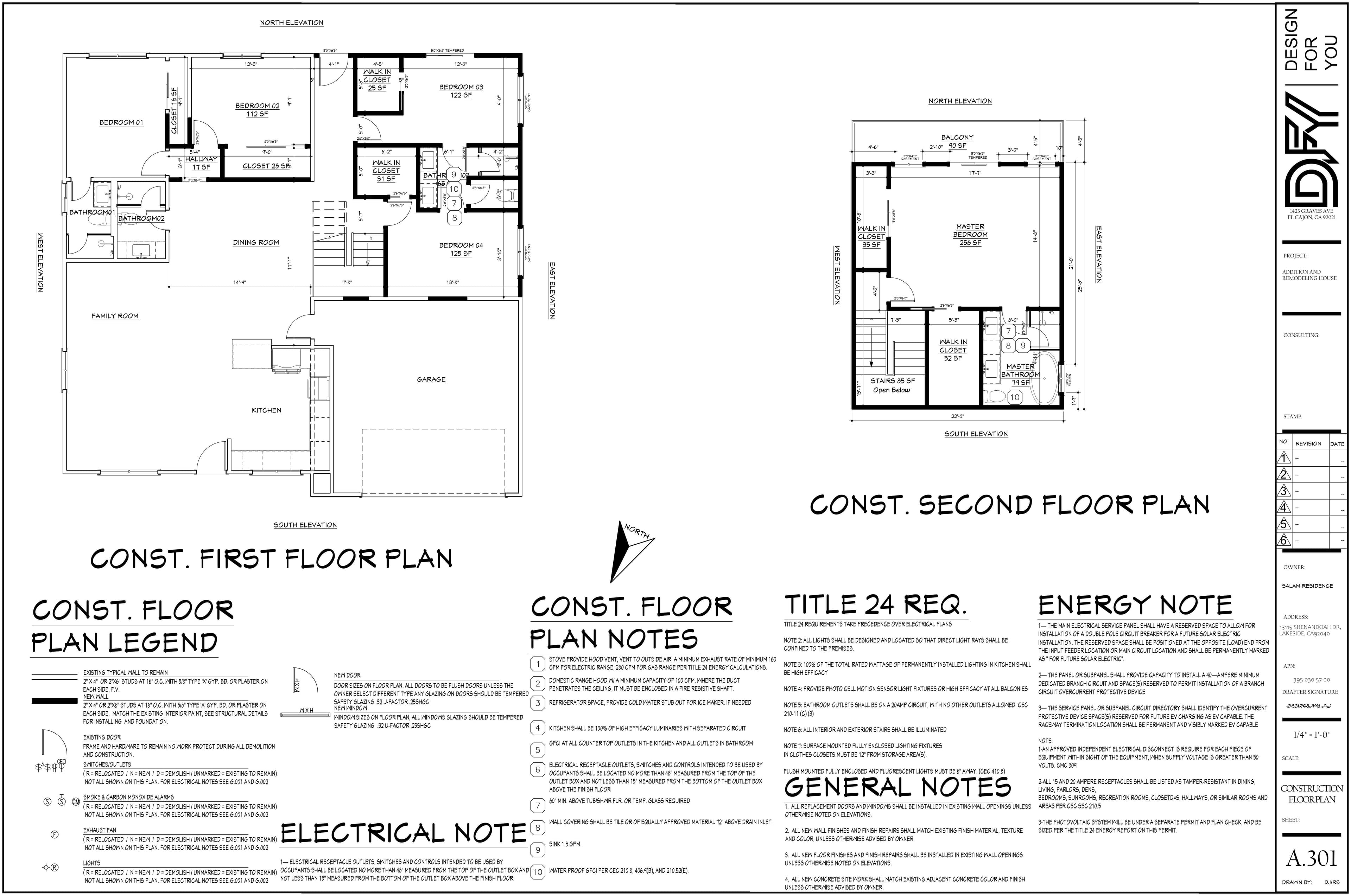
A.301 · Construction floor plans, 1st & 2nd
Brief
A single-story three-bedroom ranch on a lot in Lakeside, California, with a pool to the rear and tight side setbacks. The owners wanted a second story added over the existing footprint, the kitchen relocated, and several interior walls (bearing and non-bearing) taken out to open the ground floor. Construction Type V Non-Rated, single-family dwelling, full residential permit set required for plan check.
The condition that shaped the set: an addition of this scope is not a remodel with a roof on top. The existing foundation had to be checked against new gravity loads from a second story; the existing roof framing had to be removed and re-framed as a floor; the kitchen relocation had to coordinate with new plumbing risers running through the new structure; and every wall removed on the ground floor had to be replaced with a header, a post, and a footing sized in the structural set. The drawings had to make all of that legible to a plans examiner in a single read.
The constraint chain
My first pass was the demolition plan, A.201, which mapped the existing 3BR ranch and called out what was leaving. I tagged bearing walls separately from partitions because the structural engineer needed to see the load path before sizing the new framing. The new floor plan, A.301, placed the relocated kitchen, the new stair, and the second-story bedrooms over a footprint that respected the side setbacks already drawn on A.101 and A.102.
The structural set drove the rest. S101 carried the foundation plan with new pad footings under the posts that replaced the removed bearing walls; S102 carried the floor and low-roof framing for the new second story; S001–S003 held the general notes, schedules, and details. When the structural engineer called for a wider footing under the new ridge post, I had to move a drain line on the architectural utility plan, A.302, that had been routed through the same area. That's the kind of catch the set is built to surface before the slab is cut.
A.303 carried the west, east, and north elevations and one building section. The section was the document that proved the new floor framing cleared the existing first-floor ceiling height and that the new roof pitch matched the existing gable. A.401 carried the roof plan with the new ridge, valleys, and the re-framed slopes over the addition.
The general notes and the energy set
I drafted G.001 and G.002 (the general notes sheets covering CalGreen, electrical, mechanical, and plumbing) in full. These are the sheets a plans examiner reads first, and the sheets that carry the code citations the rest of the set relies on. They aren't boilerplate; I assembled them against the California residential codes in force at submission and tuned them to the scope.
T01 and T02 carried the Title 24 energy compliance, HERS verification items, and water-heater compliance, prepared in coordination with Estudio75 (Ricardo H. Perez). The energy documents had to match the window schedule, the insulation values called on my wall sections, and the mechanical equipment listed on my utility plan. A mismatch between the Title 24 forms and the architectural set is one of the most common plan-check corrections on residential additions, so I did the coordination sheet-by-sheet before submission.
The collaborators
The structural engineering, S001 through S201, was produced by HTK. The Title 24 / HERS package was produced by Estudio75. I submitted the set under DRY Design For You (Dhurgham AJ), the stamping firm I partnered with for permit submission. This is the standard arrangement in residential CAD work: I assemble the set, the consulting engineers contribute their disciplines, and a licensed firm reviews and stamps for plan check.
The architectural drafting (sheets T.001, G.001, G.002, A.101, A.102, A.201, A.301, A.302, A.303, A.401) and the coordination of the set as a whole was my work, in AutoCAD and Revit.
The deliverable
Eighteen sheets (title, general notes, site, demolition, construction plans, utility, elevations, section, roof, structural notes, structural plans, structural details, and the Title 24 package) coordinated into a single permit set for a Lakeside second-story addition. I assembled the set to walk through plan check on a private residence with real structural complexity: a foundation re-checked for new loads, bearing walls replaced with engineered framing, a relocated kitchen, and a second story built over an occupied ranch. The drawings carry the work end to end, from the existing-conditions survey to the energy compliance forms a stamping firm could submit.
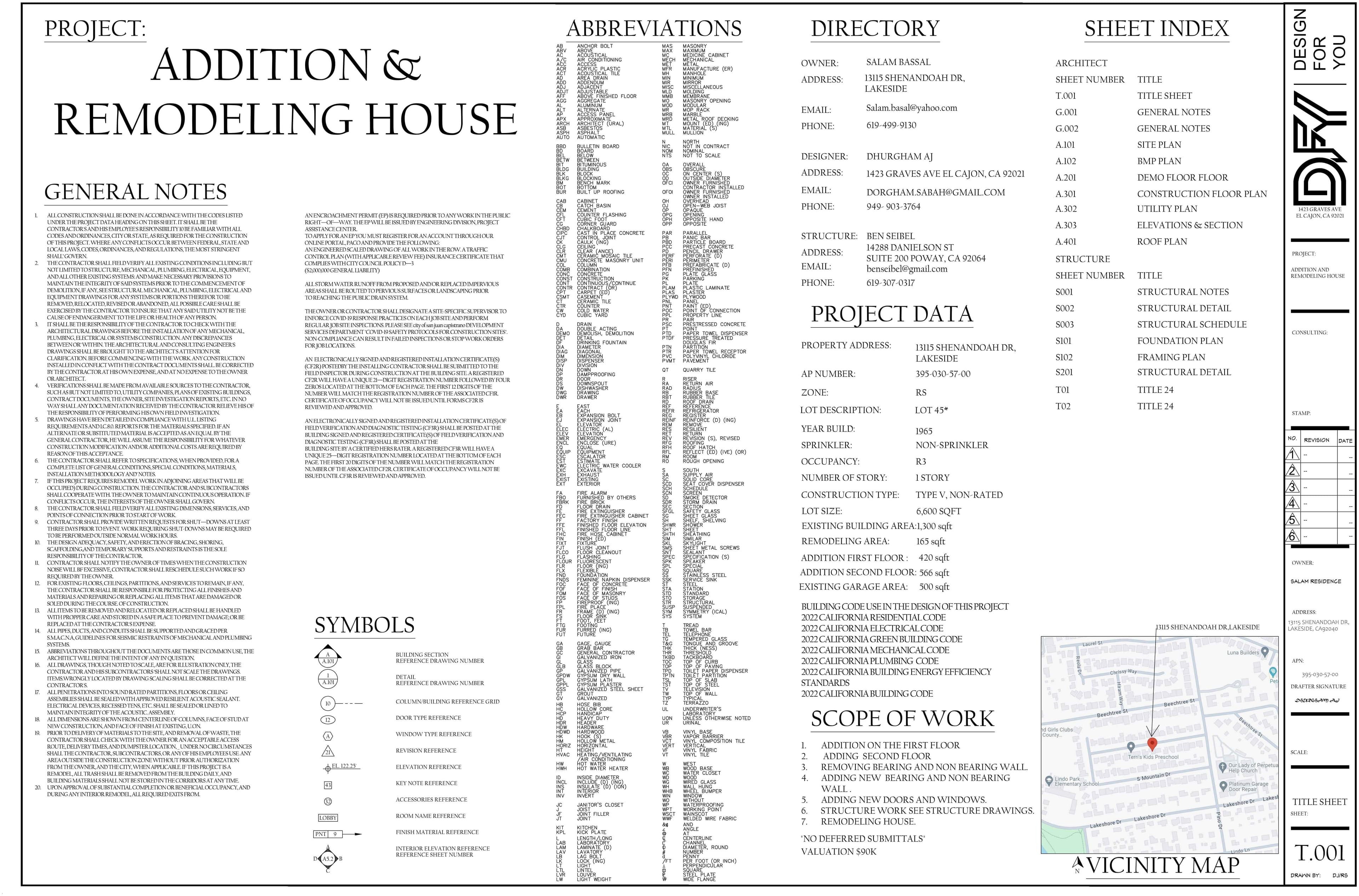
T.001 · Title sheet 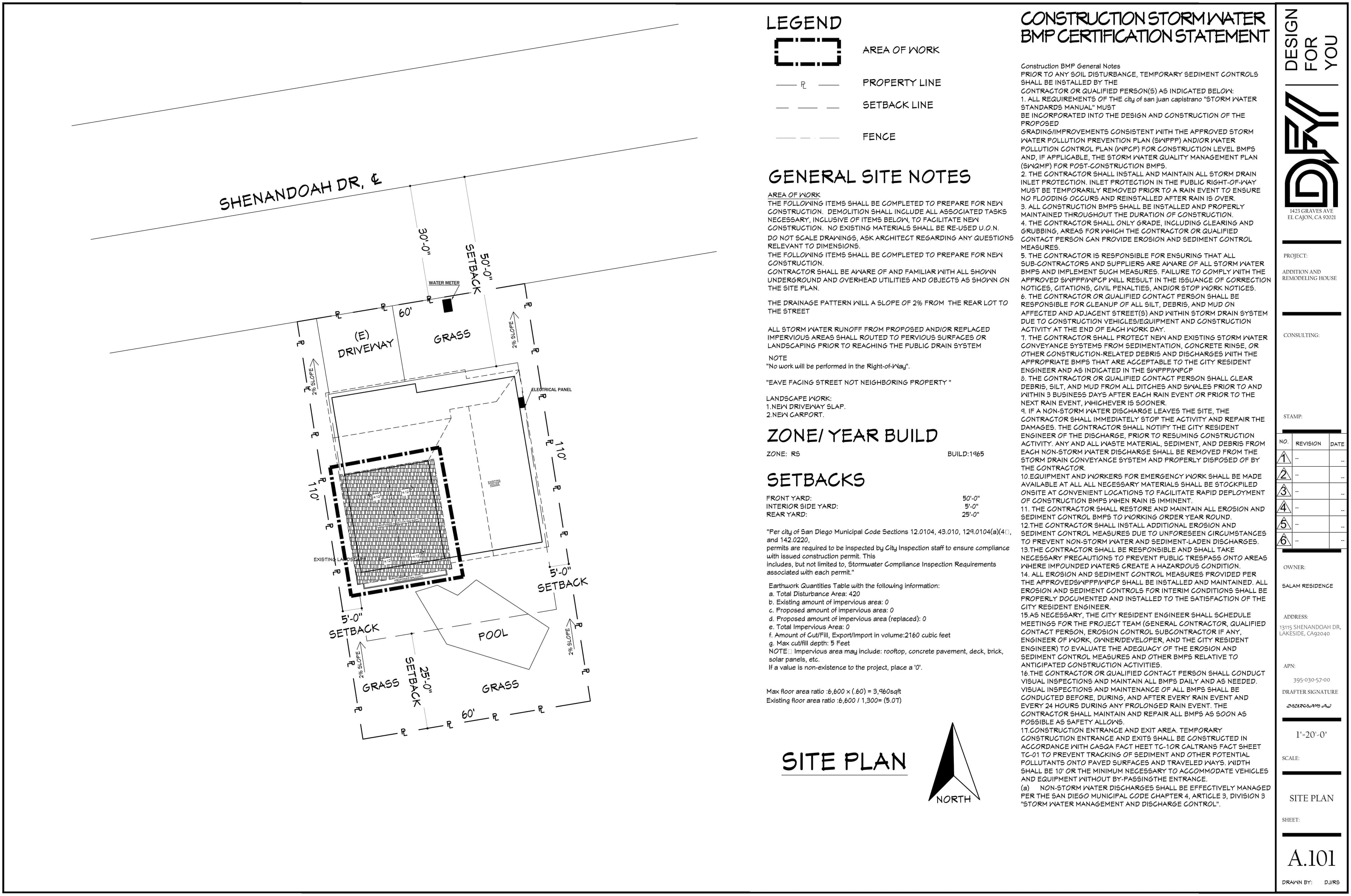
A.101 · Site plan 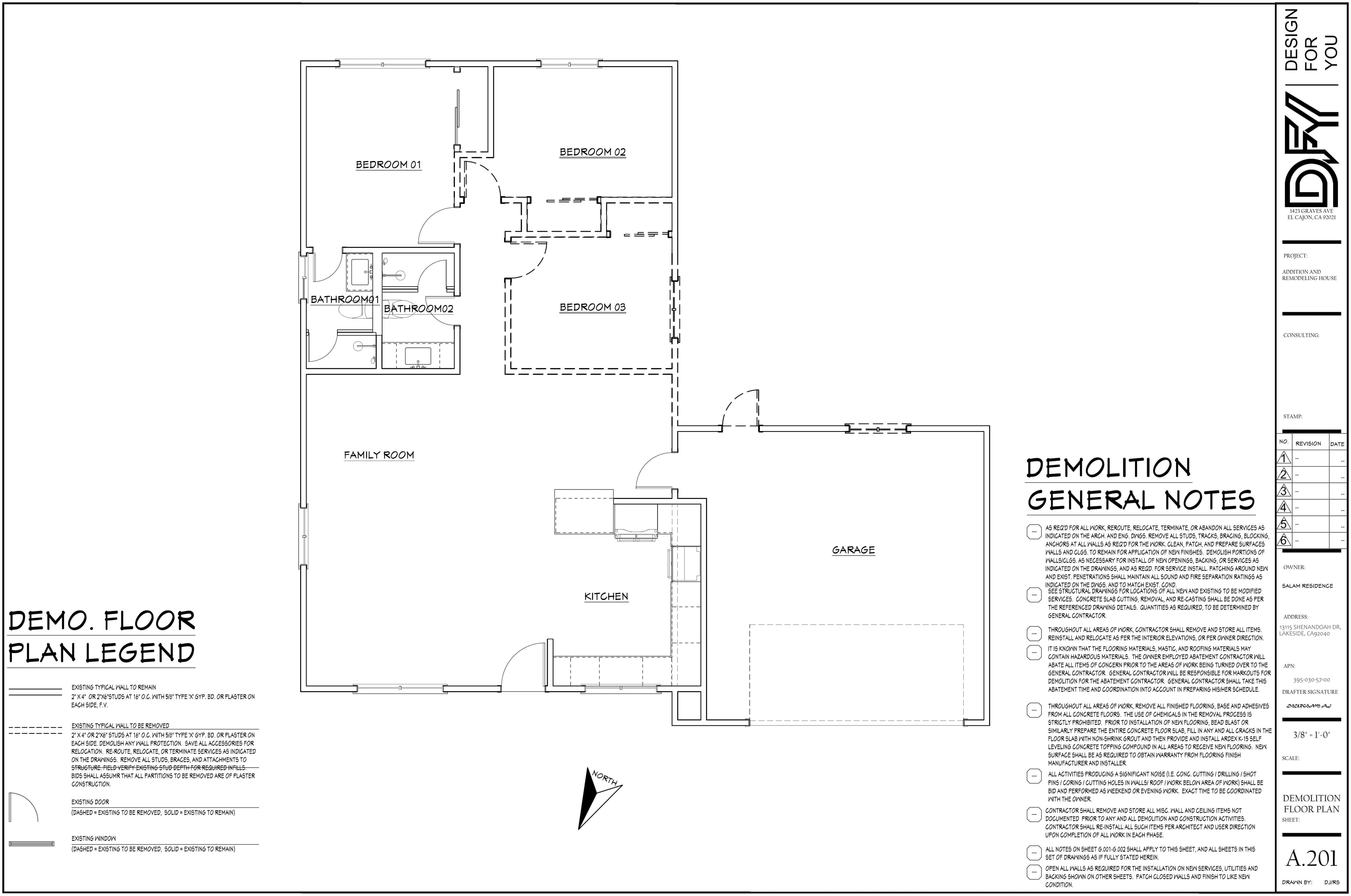
A.201 · Demolition plan A.301 · Construction plans 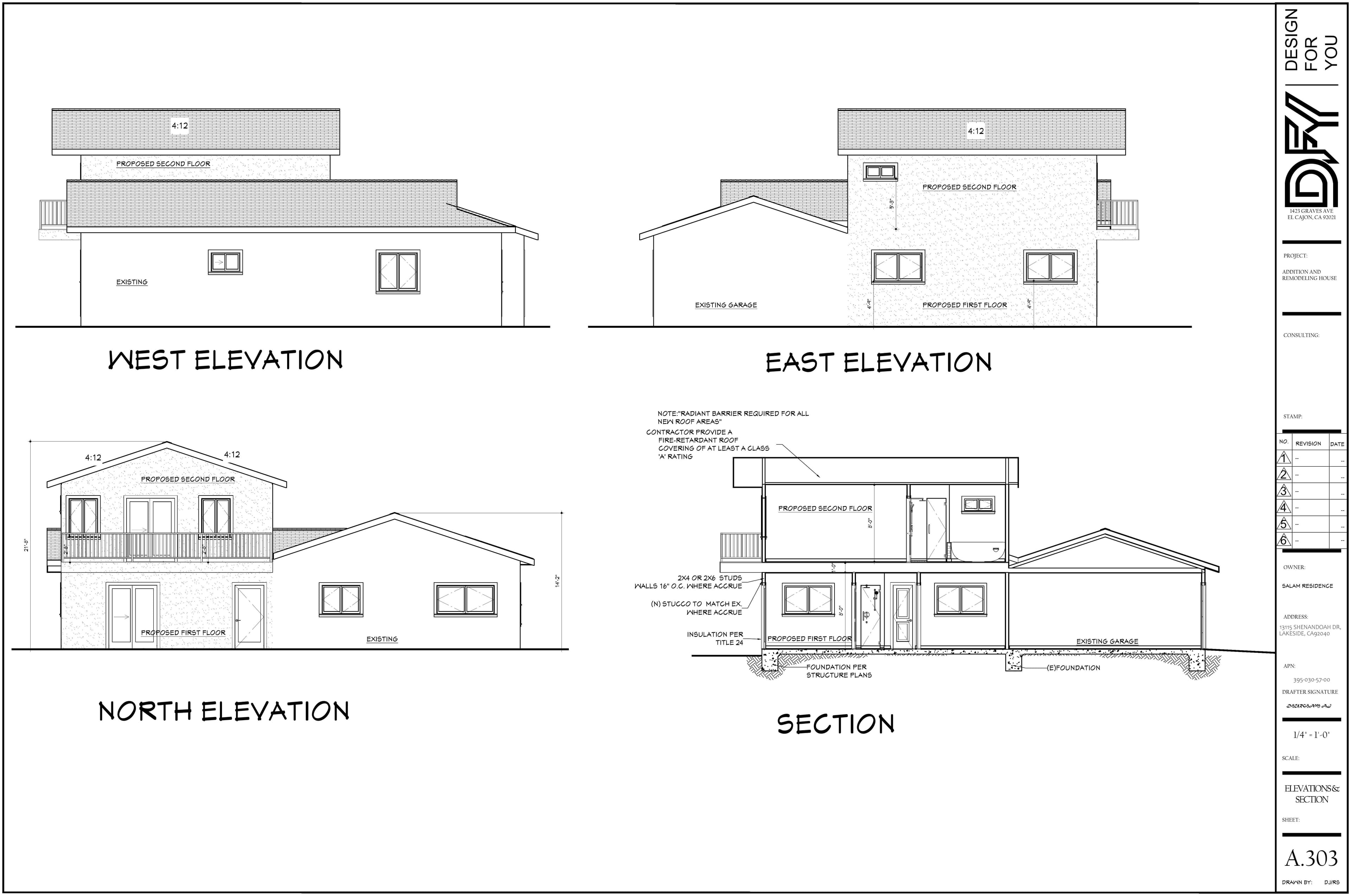
A.303 · Elevations & section 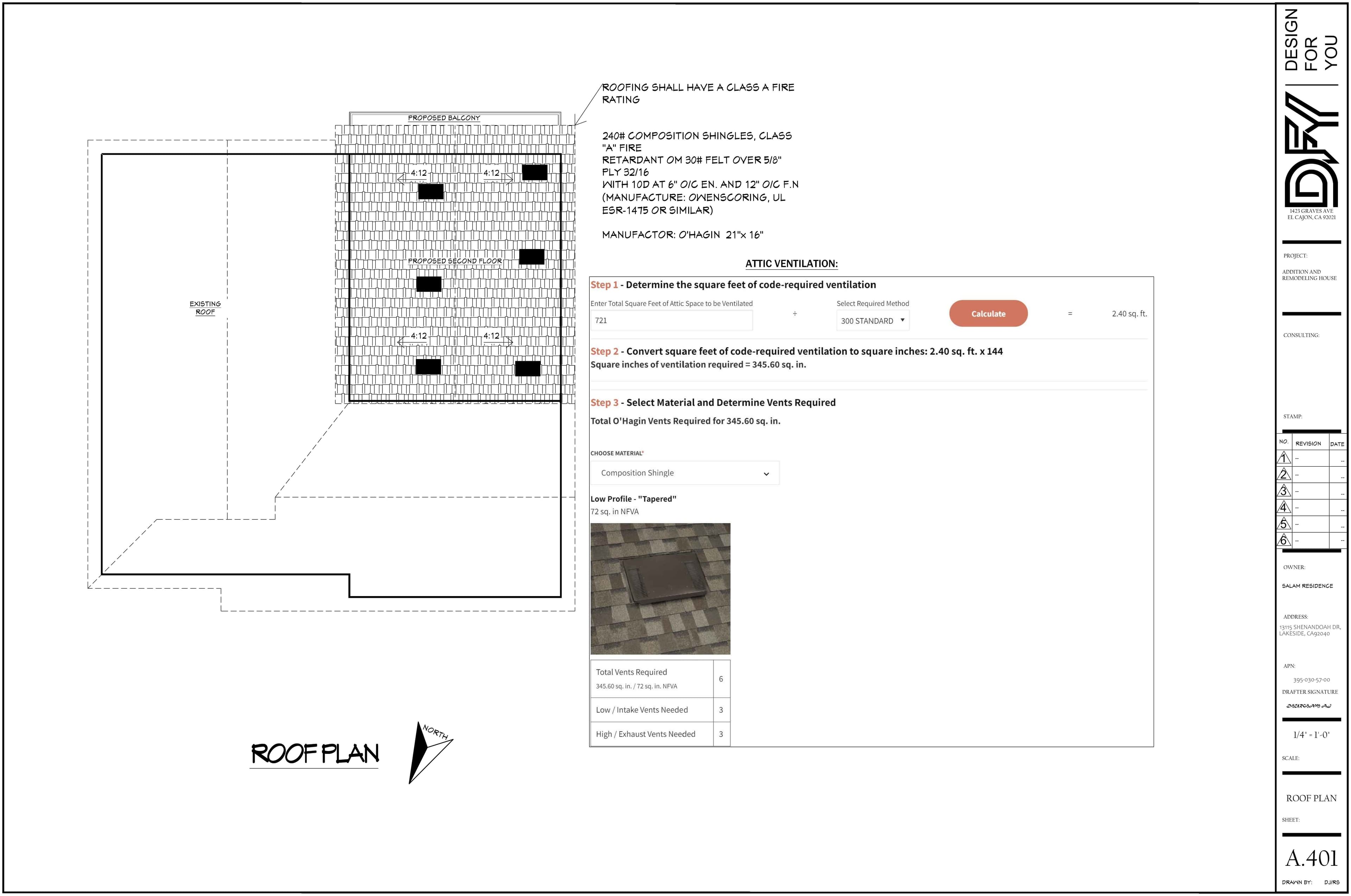
A.401 · Roof plan